
Tun Tavern and Philadelphia’s Marine Corps Origin Story
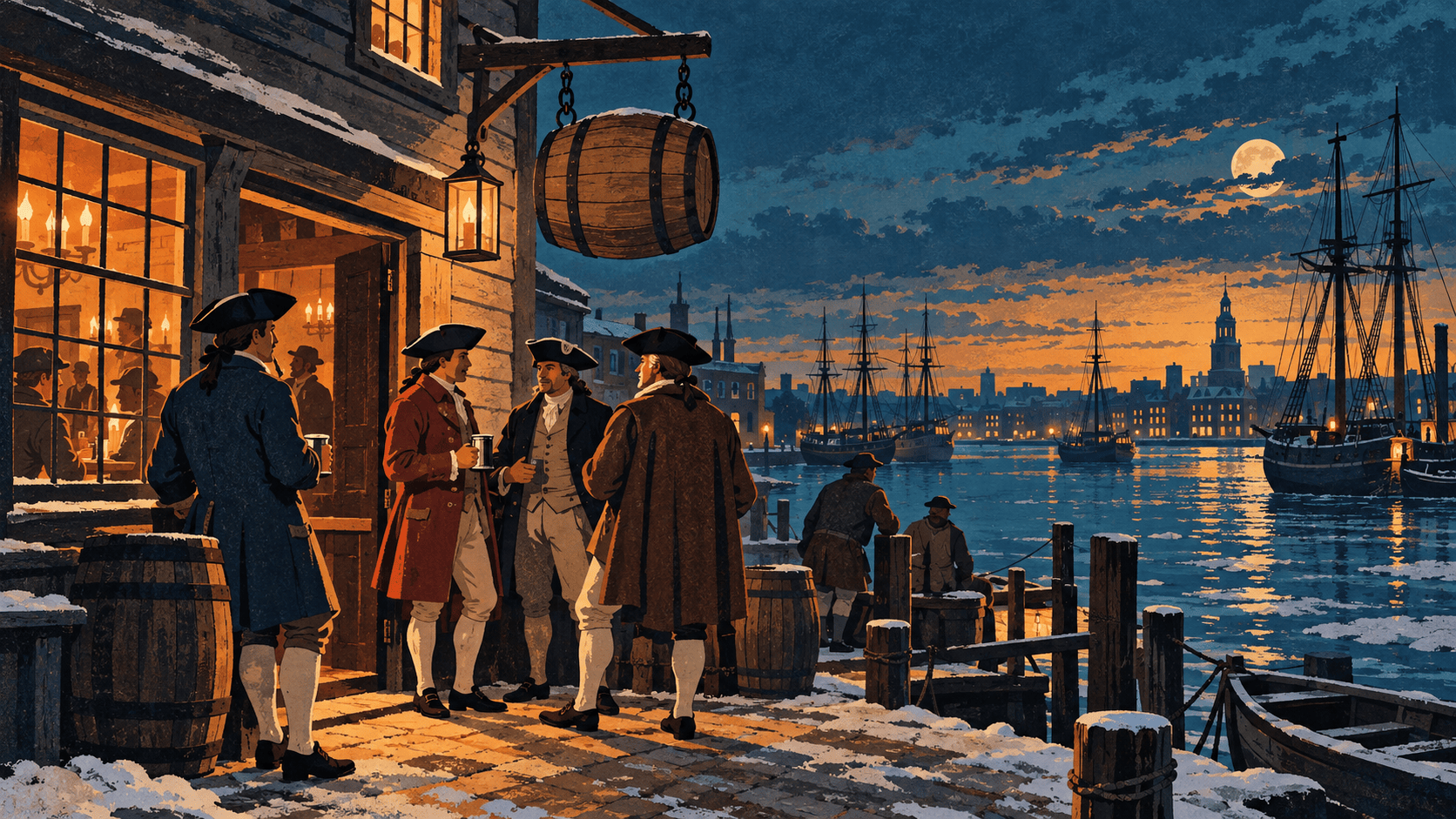
There’s no colonial tavern waiting at the end of the sidewalk anymore. The original Tun Tavern is gone, and the modern waterfront has changed beyond recognition. But the story attached to that old Philadelphia public house still has an unusually lively afterlife: Marines trace their beginnings to a 1775 call for recruits in the city, and Tun Tavern became the place most closely tied to that origin. It’s a small patch of local history with a much bigger reach.
A tavern at the edge of a growing city
Philadelphia’s taverns were more than places to eat and drink. They offered travelers a bed, merchants a place to meet, and residents a room where news moved from one table to another. Near the waterfront, that social role was especially visible. Sailors arrived with stories, trade brought people through the city, and public houses became part of the practical network that connected strangers.
Tun Tavern stood in that world. It has also collected a measure of lore over the centuries, so it helps to distinguish the broad historical record from the neat version people often hear. The Continental Congress authorized two battalions of Marines on November 10, 1775, while meeting in Philadelphia. Marine Corps accounts associate Tun Tavern with recruiting for those early battalions and recognize it as the Corps’ birthplace. That association is deeply embedded in Marine tradition, even though the exact details of recruitment and the tavern’s role are not as tidy as a single-room origin story can make them sound.
What happened in November 1775
The new Continental Navy needed Marines: people who could serve aboard ships, defend them and take part in landings. Congress approved the formation of two battalions, and Samuel Nicholas was appointed to organize the effort. Marine Corps histories identify Philadelphia’s Tun Tavern as a key recruiting site. November 10 later became the Marine Corps birthday, commemorated annually by Marines around the world.
That chain of events explains why a tavern has such a prominent place in the Corps’ founding tradition. It also shows how a revolution was built from ordinary civic spaces. Recruiting didn’t happen in an abstract symbol called ‘the birthplace of an institution.’ It happened through conversations, networks and people moving between public rooms, docks and government chambers. A tavern could be a setting for a major national story and still be a place where someone stopped for supper.
The building is gone; the story is not
Tun Tavern burned in the eighteenth century and does not survive as a visitor attraction. The site is associated with Philadelphia’s old waterfront, where later changes to the shoreline and roads have made the colonial city difficult to picture. If you seek it out, check a current historic map or an official marker listing before setting off; this is a story about a lost building, not an intact tavern you can walk inside.
That absence can make the history more interesting. Philadelphia is full of visible landmarks, but not every important story comes with a preserved doorway. A place can matter because people gathered there and because later generations kept returning to its meaning. For Marines, Tun Tavern is a point of origin and a tradition. For the city, it’s a reminder that political change and military organization were connected to everyday life on the streets.
Why tavern stories still fit Old City
The history of taverns also connects to how Philadelphia is explored today. A modern pub crawl is obviously not a reenactment of colonial life, and today’s bars are not Tun Tavern. The useful link is the neighborhood’s social rhythm: people meet in public places, share a drink or a meal, and talk through the stories that make a city feel more human than a row of dates on a plaque.
Philly Crawling’s Liberty History Tour Pub Crawl carries that spirit through Old City, where a guide connects local bars with stories about colonial and Revolutionary Philadelphia. Public crawls run daily at 4:00 p.m. and 7:00 p.m. and last 2 hours and 15 minutes. The route visits four bars within a few blocks and meets at 203 Market Street, at Market and North 2nd streets. All guests must be 21 or older with valid ID. Drinks are available for purchase at each stop, but they are not included or required. Check current details and availability on the official tour page.
Follow the thread, not just the monument
A good way to understand Philadelphia is to look beyond the famous rooms and ask what kinds of places made the city work. Taverns, print shops, docks and meeting halls each gave people a place to exchange information and make decisions. Tun Tavern’s story belongs in that wider picture: a local public house associated with a national beginning, remembered through a tradition that has traveled far beyond its original neighborhood.
You won’t find the original sign or the room where the story unfolded. You can, though, spend time in the district that shaped early Philadelphia and hear how its tavern culture fit into the larger story of a new country. Let the lost building stay lost, and let the history stay complicated. That makes the story more—not less—worth hearing.